.png)
%20(2).jpg)
.gif)
VOMITORY - IN DEATH THROES
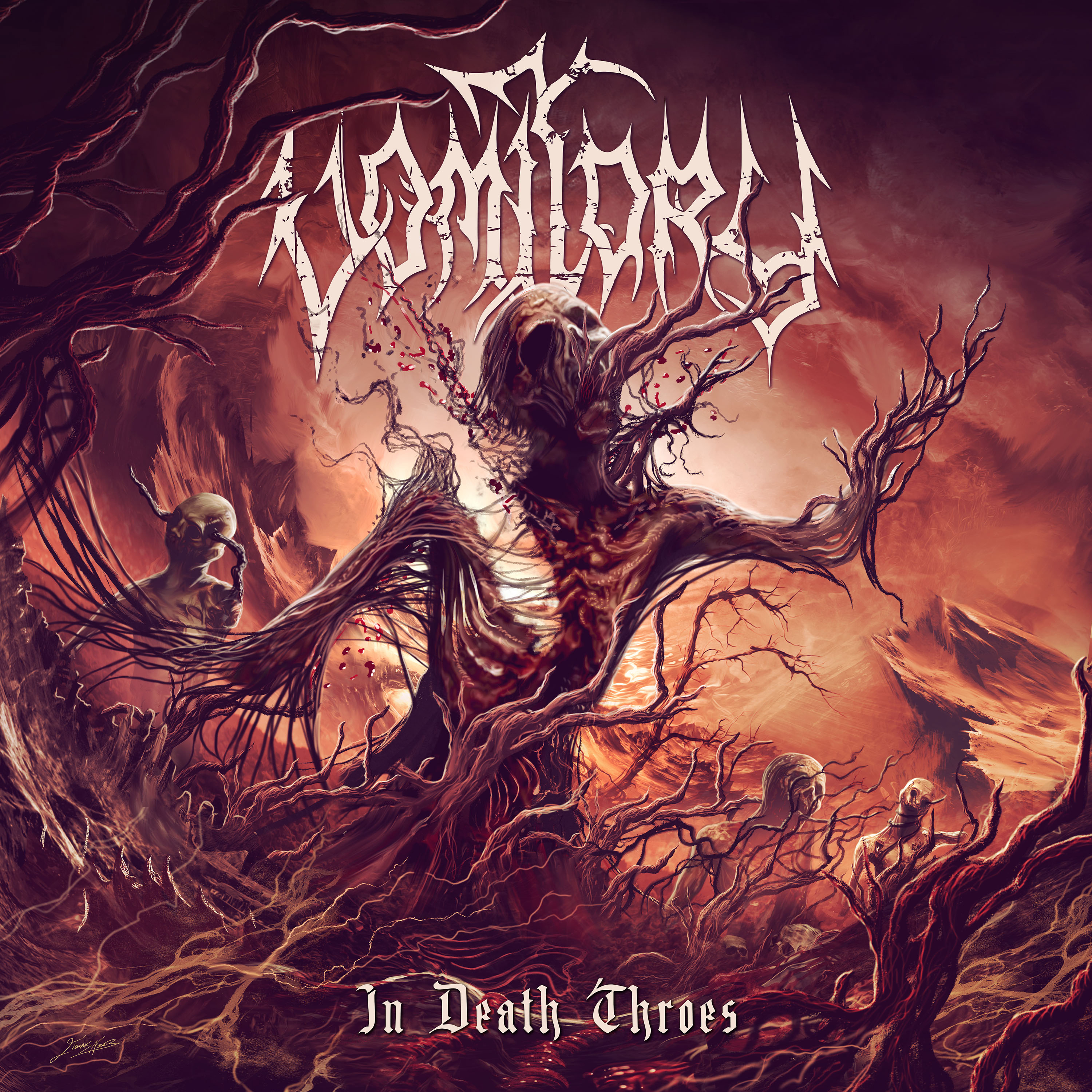
In Death Throes is already happening when you arrive. There's no scene-setting, no slow build, just Vomitory doing what they do and doing it at full velocity. "Rapture in Rupture" is mid-swing, somewhere north of 230 BPM, drums snapping tight, guitars locked into a forward push that doesn't ask for permission. You're dropped into the middle of it, and the band sounds completely in control of the violence they're creating.
First pass, this album lands clean but doesn't linger. It's good, no doubt. Tight, efficient, no wasted motion, but it doesn't immediately demand your attention. You acknowledge the quality, respect the execution, and move on. Then somewhere around the third or fourth listen, "For Gore and Country" hits differently. There's a palm-muted groove in the midsection that catches your body before your brain realises. Your head's moving, your shoulders follow, and suddenly you're inside it. That's the shift. It’s not from confusion to clarity, but from distance to immersion.
I went into this expecting something more, but what I got was something better, because In Death Throes isn’t chasing reinvention, instead offering absolute refinement. The craft is there, buried in the delivery. Shifts in time signature and phrasing you don't consciously register. Tempo changes that move from sprint to something heavier. On the title track, sitting dead centre, Vomitory gives the audience wider riffing, a more patient build, and structural choices that reward close listening. None of it is announced. The skill is in making all of it feel inevitable.
A few more listens and I’m thinking about Bolt Thrower and Motörhead - bands that built identity through consistency rather than constant change. You don't listen to them for surprises. You listen because they do their thing better than most.
The vocals sit in a single register, cutting cleanly when the tempo's up. At speed, the bark is part of the machinery, locked in with the blast. When the music opens out and the guitars reach wider, the voice doesn't follow. It's the one dimension that stays fixed while everything else moves.
By the time the album clicks, it's not the spectacle that holds you but the craft. The way the riffs lock in, the slight drag of the groove, the sense that everything is sitting exactly where it should. You start to notice the edges: string noise, pick scrape, the physicality of it all. And once you're there, it's hard not to run it back.
SCORE 9/10
REVIEWED BY RYAN LIND


SOUNDWORKS TOURING AUSTRALIA UPCOMING TOURS - TICKETS ON SALE NOW
PRIMITIVE MOTH - CLICK HERE TO DISCOVER ARTISTS
