.png)
%20(2).jpg)
ERDVE - EPIGRAMA
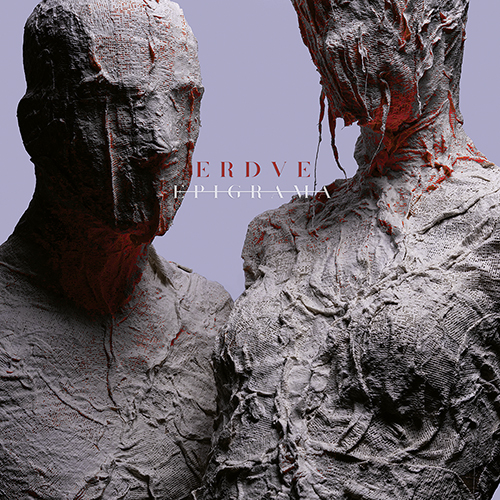
There's a point where "crushing" stops being a useful word. It gets thrown around so casually in heavy music that it often just means "loud" or "aggressive." Epigrama, the upcoming release from ERDVE via Season of Mist, available on May 29th, forces a reset. This isn't crushing as force. It's crushed as an end point. You're not being hit. You're experiencing being so defeated there's no more point in trying.

The riffs are simple, almost stubbornly so, but they're tuned and layered into something that feels less like a guitar tone and more like environmental pressure. Bass and guitar often collapse into the same space, moving in lockstep, removing any sense of separation. There's no air at the bottom end of the mix. Up top, the cymbals are buried, stripped of shimmer. The drums pulse, but they don't breathe.
Against that weight, melody appears, but never as relief. It surfaces through fragile lines that feel almost warm by comparison, then it disappears just as quickly. Those flickers of melody don't resolve any of the tension. You hear something that resembles hope, or at least the memory of it, and then it's gone. The result is a constant push-pull between longing and repulsion. The heavy sections push you away. The melodic fragments pull you toward something you can't hold. Neither wins.
Even without understanding Lithuanian, the vocal delivery so fully carries the sound of futility it lands as testimony rather than performance. Human, immediate, inevitable. The translated lyrics confirm what the delivery already gave us. Guilt, erosion, irreversible loss.
Structurally, Epigrama plays less like a collection of songs and more like a controlled spiral, each track another moment in a psychological arc. On Ydos, the music loosens its grip not because the emotional content lightens, but because the character has stopped resisting. It isn’t an exhale, it's what dissolution actually sounds like. Suffocating weight giving way to moments of drift, then pulling you back down.
Later, Svertas finds something close to a moment of agency. Drums and bass fall away. A clean melody is left standing. Then the weight returns, and so does the inevitability. Across its passages, the album constructs a perpetual sense of reaching that never arrives. When the music briefly opens up, it’s never to offer reprieve, it's simply a moment where you're not actively descending.
ERDVE produced this record themselves. They wrote it, recorded it, mixed it, mastered it. There's no external hand softening the edges, no outside voice asking "are you sure?" Every suffocating choice survived because the people making it understood exactly what they were building. ERDVE didn't ask "what should this song sound like?" They asked "what state should this album put you in?" Every element, composition, performance, production, is the answer to that question. The self-production here doesn’t feel like a budget decision or a control instinct, it comes across more like a philosophical commitment to the work being whole. The vision and the delivery mechanism are the same hand, not separate layers. A single mechanism built around grief and the ghost of hope.
SCORE 9.5/10
Reviewed by Ryan Lind

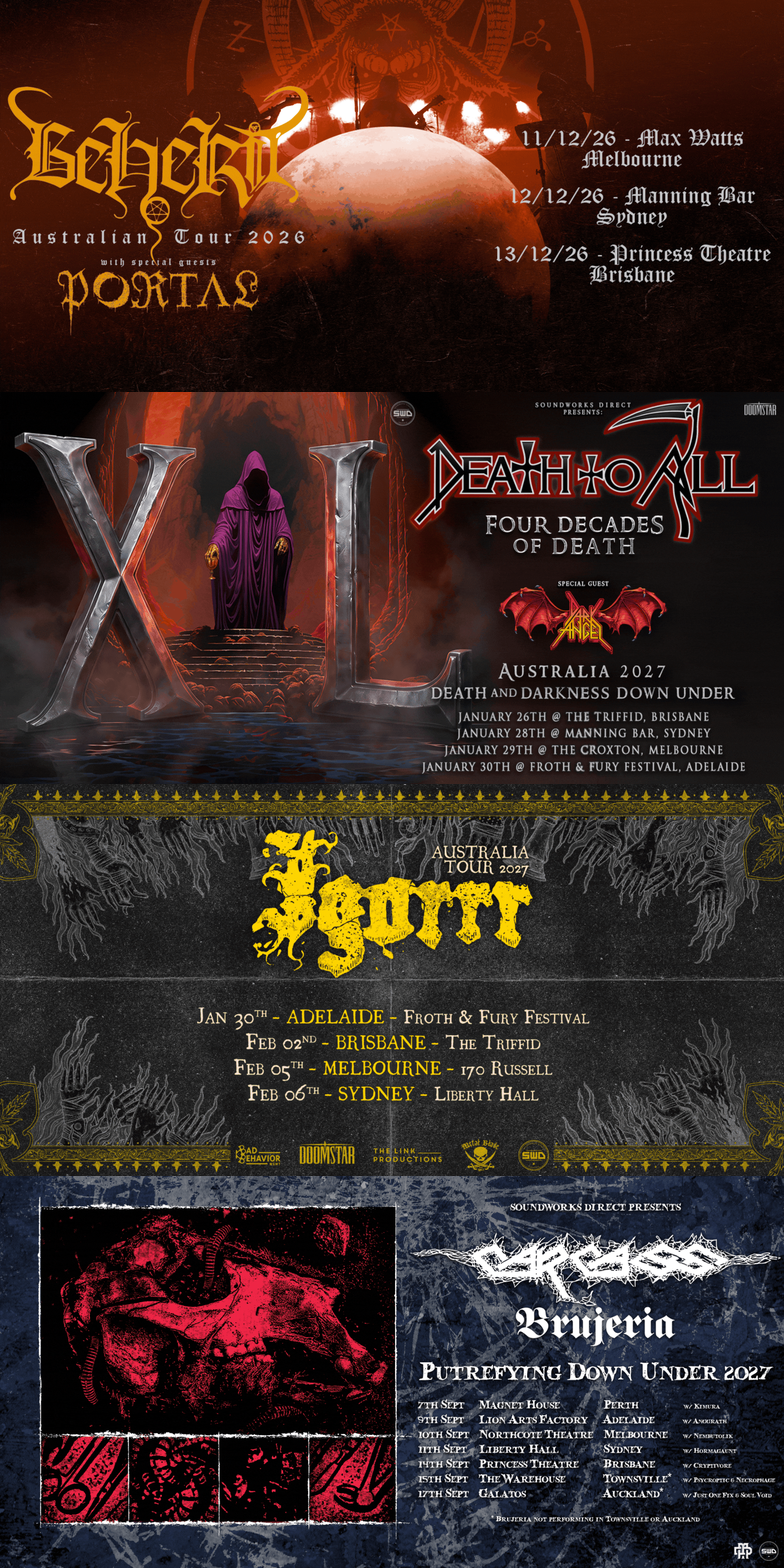
SOUNDWORKS TOURING AUSTRALIA UPCOMING TOURS - TICKETS ON SALE NOW
PRIMITIVE MOTH - CLICK HERE TO DISCOVER ARTISTS