.png)
%20(2).jpg)
DIMMU BORGIR - GRAND SERPENT RISING

Release Date: May 22, 2026 via Nuclear Blast Records - The easy read on Grand Serpent Rising is that Dimmu Borgir have returned to form. Darker, heavier, guitars back in front. Eight years after Eonian, the corrections have been made. That's not wrong. But it's not the whole story either.
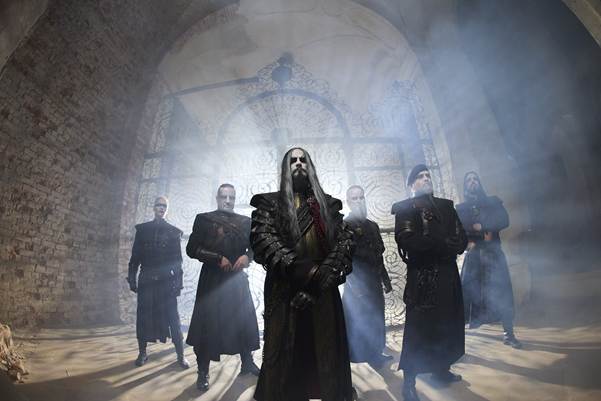
Sit with this record long enough and something else starts to emerge. What you hear is a band choosing to come back. Abrahadabra stretched orchestral maximalism to its limit; Eonian dissolved into electronic texture. Both records pushed outward, testing how far the Dimmu identity could be morphed before it lost shape. Grand Serpent Rising feels like the moment they stood at those edges, looked down, and walked back. Not out of hesitation, but with intent. There's a quiet confidence in that decision.
Opening song Tridentium sets the terms before a note of metal is played. Strings, rain and distressed textures place you somewhere cold and unwelcoming, but the choirs resolve toward something almost hopeful, a sorrowful melody that opens rather than closes. Is this a welcome, or a warning?
Ascent, the first full song, establishes the rules early: guitars first, orchestration in support. It's a load-bearing track, one that would stand if you stripped the symphonic layer entirely, and by the time you reach track three As Seen in the Unseen, the album has already earned your trust, and the orchestration expands without overwhelming the core. Track nine, The Exonerated, inverts the old excesses. The orchestra swells in the chorus, this is still Dimmu Borgir, but when the guitar solo arrives it claims the space rather than serving it. That hierarchy shift is the whole argument in miniature. The guitars carry the weight again.
The Norwegian-language tracks reveal something else. Ulvgjeld & Blodsodel opens with a bullhorn blown raw over a metronomic pulse, a deliberate tick that holds the track in place while layers slowly gather around it. Nearly two minutes pass before the full weight arrives. The vocals take on an almost polyphonic texture here, harsher and more elemental, as though the native tongue pulls something out of Shagrath that English doesn't reach. The scale of this track is cinematic, but the composition holds. Every layer earns its place.
It's around here the record starts to reveal its sleight of hand. For all the expected darkness, the emotional arc leans upward. The chord progressions resolve with lift rather than collapse. The sequencing builds toward release rather than suffocation. Halfway through the album the sense of ascent becomes unmistakable. It reminds me of the melodic optimism that bands like Iron Maiden smuggled into heavy music decades ago. The darkness is still there, but it functions as a delivery system. What it delivers is something closer to triumph.
By the time the closer arrives, choirs dominant, guitars receding, the album has completed its argument. After three decades, Dimmu Borgir sound less like a band returning to form and more like one that needed to find its edges before it could build from the centre.
SCORE 9/10
Reviewed by Ryan Lind


SOUNDWORKS TOURING AUSTRALIA UPCOMING TOURS - TICKETS ON SALE NOW

PRIMITIVE MOTH - CLICK HERE TO DISCOVER ARTISTS