.png)
%20(2).jpg)
ÆONIK - THE ROAMER OF HEAVEN AND HELL

Release Date: April 30 via Fetzner Death Records - A lot of bands have taken the Dissection template and diluted it into melodeath with black metal aesthetics. Æonik don't. And on their debut record The Roamer of Heaven and Hell, that level of clarity matters. This is a black metal record that understands its lineage and then gets to work. Tremolo and blasts are the engine and atmosphere, the melodic carrier, pushing the songs forward.
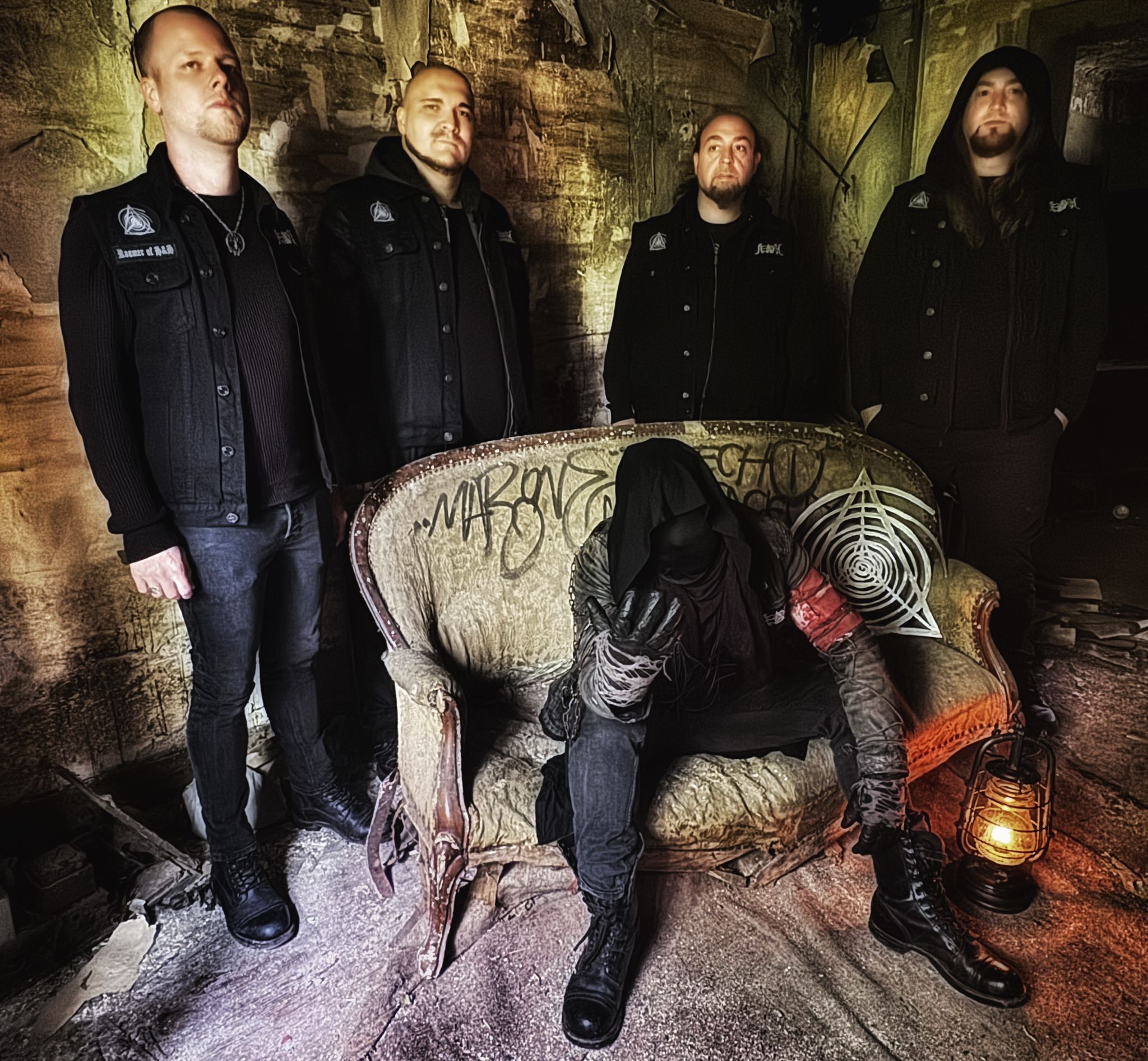
"Visions" is the clearest exhibit, eight minutes of harmonised leads locking in, then peeling away into a rhythm/melody split that keeps the track reaching rather than circling. "Soulharvester" works the other angle: percussive, death-metal-adjacent guitar work creating rhythmic disruption but always resolving back into the tremolo and melody that anchor the record. "Scars Are What Remains" pulls in another direction. Slower, hypnotic, and leaning into repetition rather than ferocity. Across the album, the dual guitar dynamic becomes the compositional core. Sometimes unified, sometimes deliberately pulling apart.
The vocals stay rooted in the same ground. There are no shrieks here, but the growls sit firmly within black metal's harsh vocal tradition rather than reaching for death metal's lower register. Jeff Buchette handles them confidently, with enough variation in phrasing and intensity that they never flatten. The effect is a record that commits to its identity across every element, and when death metal surfaces it feels natural, brief incursions of rhythmic aggression that the black metal frame absorbs without shifting.
The production, self-handled from mixing through mastering, mostly backs this up. There's width in the mix, space that lets the guitars breathe, occasional acoustic passages providing a moment of air between heavier sections. It serves the atmosphere rather than choking it, which is where DIY efforts often stumble. But the closing stretch of "Ruins of the Divine" raises a question. Everything converges into a wall of sound, but whether that flattening is deliberate obliteration or the mix hitting its ceiling is left unresolved. It's not a failure, but it is the one point where ambition and execution sit in tension.
The seams also show in the transitions. Individual sections land but occasionally the connective tissue can be blunt. On a record built around the Roamer, a figure moving between dimensions and times, that matters. The music mirrors the restlessness: shifting between melodic ambition, hypnotic repetition, and rhythmic aggression. You can feel the arc, but you can hear where the joints are still being learned. It's a craft note, not a structural flaw, and it's the kind of thing that sharpens between a first and second record.
After forty-nine minutes of movement between modes, the record compresses to a single low-end impact, guitars ringing out into nothing. The Roamer stops. Whether that's an arrival or just the end of this chapter is a question worth sitting with, and a strong reason to see where this band goes next.
SCORE 8.5/10
Reviewed by Ryan Lind


SOUNDWORKS TOURING AUSTRALIA UPCOMING TOURS - TICKETS ON SALE NOW

PRIMITIVE MOTH - CLICK HERE TO DISCOVER ARTISTS